
How Rita-di, our Green Mile team lead, rebuilt her relationship with numbers, and why it matters for zero-waste systems in the mountains.
In community-led waste management, the work is sporadically supported by dashboards, spreadsheets, or exact monthly reports. It is shaped by hands, habit, and the daily movement of materials through forested hills. This is the story of how one woman, Rita Di, learned to make data her own, and how her journey is reshaping the way we build community-led zero-waste systems at TIEEDI.
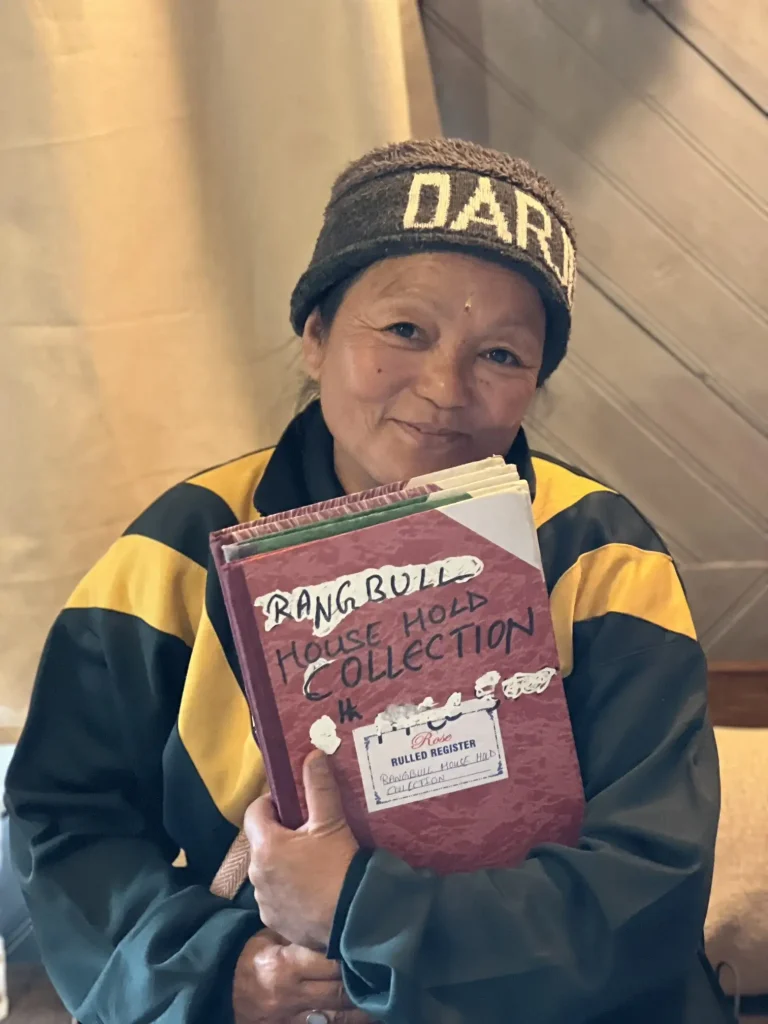
This is a story of Rita Di
A story of grit, reinvention, and two very different worlds figuring out how to meet in the middle.
Before I get to her, some background.
I started my working life in places where everything had a metric and everything had a dashboard. KPIs, quarterly reviews, long meetings about small numbers. I was the person who got excited about VLOOKUPs and nested formulas. Not kidding – I found actual comfort in them.
That phase feels far away now. A lot has happened between then and now.
Today, my work looks different.
At TIEEDI, we try to build dignified livelihoods in the Eastern Himalayas. We restore forest patches, run waste systems, and try to stitch together a way of working that brings some fairness into the lives of the people who carry most of the load.
The old habits didn’t disappear though. We still made spreadsheets. We still classified waste down to the last wrapper. At one point, we had 53 categories because somewhere in my head that made sense.
This is where Rita Di enters.
She joined our waste team five years ago. She didn’t say much in the beginning, but she worked hard, knew what she was doing, and showed up every day. Leadership grew around her naturally. Eventually she became the one running our Materials Recovery Facility – the place that keeps the whole waste system from falling apart.
A couple of weeks ago, at our weekly meeting, I asked her a basic question:-
“How much did we make from recyclables last quarter?”
She shrugged and said,
“सबै डेटा म Admin टिमलाई दिन्छु… उनीहरूले त Google form मा हालिहाल्छन्।”
I give everything to the admin team… they must be entering it somewhere.
For some reason, that landed hard.
It made me realise that the people who run the actual system, who sort, lift, segregate, negotiate with scrap dealers, clean buckets, deal with smell and rain and truck delays, had no link to the data they produced. Our digital setup might as well have been sitting in another country.
A small but important detail: Rita Di studied only till Class 3. Not because she couldn’t do more. Life had asked her to work early.
I told her gently, “If you want, we can build a system you can run yourself.”
The next morning she arrived with an armful of fresh notebooks from the stationery shop. She looked genuinely excited. She said,
“आजदेखि म आफैँ लेख्छु, आफैँ बुझ्छु।”
From today, I’ll write it myself, understand it myself.
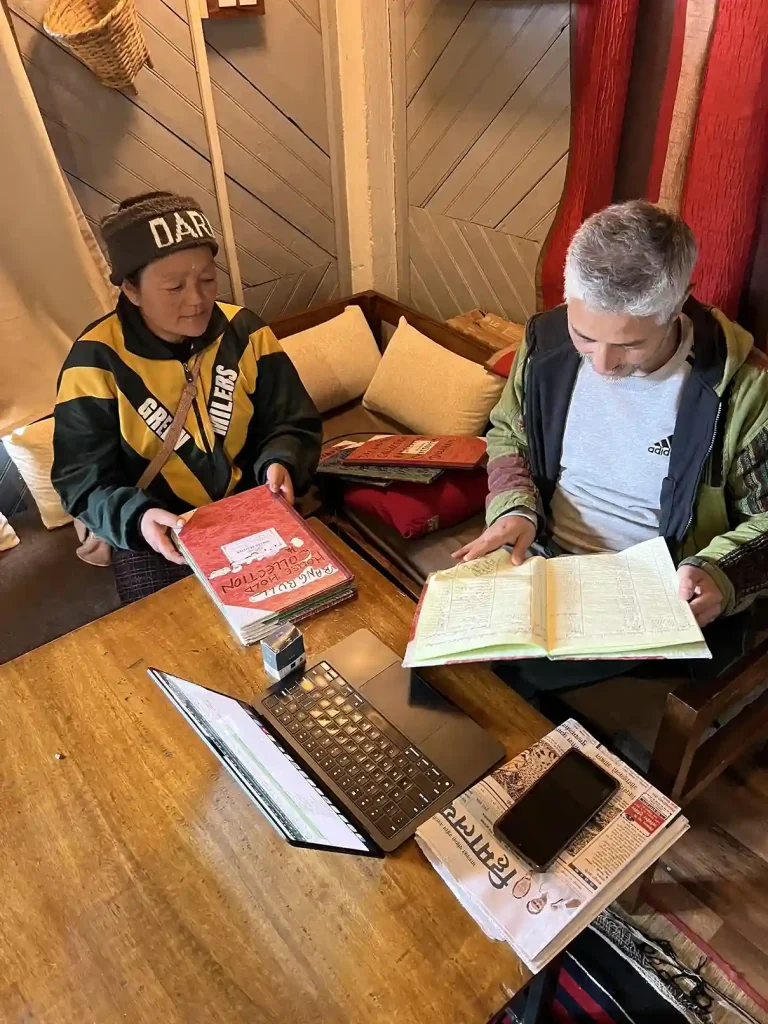
So we sat together for an hour and mapped out the basics: weights, dates, categories, income, outgoing material. A system that made sense in her hands without jargon.
What happened next wasn’t dramatic. The numbers stopped being this distant thing that lived on someone else’s laptop. They became something she could follow, question, and make decisions with.
Last week, she learned how to calculate averages. She looked up and said,
“अब त मलाई सोनाडा परिवारले कति फोहोर निकाल्छन् थाहा भो!”
Now I know how much waste Sonada households generate on average!
Later, she laughed and said,
“स्कूल जाँदा पनि यत्रो किताव लिएर गएको थिएन।”
Even in school I never carried this many notebooks.
Somewhere in the middle of all this, something shifted in me too.
I’ve built spreadsheets for half my life, but flipping through her handwritten registers felt different. It felt more grounded. It reminded me that transformation doesn’t care whether it’s digital or analogue. It cares about whether people feel a sense of ownership.
Why am I writing this?
Because dignified livelihoods, community-owned data, and functioning waste systems don’t come from fancy tools. They come from people like Rita Di, who take a small step and keep going.
And if you’re a company or institution exploring partnerships around circular economy, mountain waste systems, or regenerative livelihoods; we’re here, doing the slow work every day, and open to building something long-term.


